











Seed Potato 'Ratte', 2kg
£7.50
notes
First appearing in accounts from the mid-19th century, noting its excellent flavour, by 1934 the ‘Ratte’ potato was all but extinct, owing to the degeneration of the seed. However, in 1965 a French agronomist happened to find a remaining ‘Ratte’ growing in a garden and nurtured it back into production. Introduced to Paris in 1988, to rave reviews, it has established itself as a staple of French cuisine. Boasting a distinctive chestnut flavour, this potato is particularly suited to boiling and steaming.
Add additional options
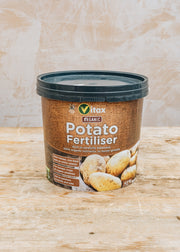
Potato Fertiliser, 4.5kg
+
£15.00
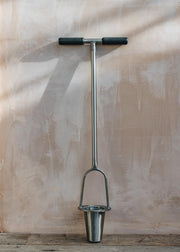
Potato Planter
+
£155.00

Hori Hori Pro Weeding Trowel with Holster
+
£39.00
Dimensions

2kg
Features
notes
First appearing in accounts from the mid-19th century, noting its excellent flavour, by 1934 the ‘Ratte’ potato was all but extinct, owing to the degeneration of the seed. However, in 1965 a French agronomist happened to find a remaining ‘Ratte’ growing in a garden and nurtured it back into production. Introduced to Paris in 1988, to rave reviews, it has established itself as a staple of French cuisine. Boasting a distinctive chestnut flavour, this potato is particularly suited to boiling and steaming.
Insights
Potato tubers belong to the nightshade family and have a remarkable story. Originating in Peru, they helped to fuel the civilisations that developed in the Andes. The 16th-century conquistadors took them to Europe and Raleigh planted seed potatoes in his Cork estate and introduced them to Elizabeth I.
Details
- Planting variety: second early
- Before planting: Be sure to chit your potatoes, leaving them in the open air to allow sprouts to grow from the eyes, which are positioned on the blunter end of the potato. Stand the potatoes with the eyes facing up in natural light and plant out when shoots are 1.5-2.5cm in length.
Planting
- Plant out once the soil has started to warm up, from April onwards.
- Plant between 8-13cm (3-5in) deep in a trench with a sprinkling of compost or fertiliser in the base
- Space 30cm (12in) apart with 40-50cm (1ft 3in- 1ft 7in) between rows.
- Ensure that the potatoes are planted with the shoots pointing upwards.
- Full sun / Partial shade
- Avoid frost
Care
- As shoots appear, cover them with a ridge of soil so that a mound of 20cm (8in) is present around each plant by the end of the season.
- Watering your plants well will help improve crop yield and discourage potato scab.
- Ready to harvest July-August
- Store in paper or hessian sacks
Glossary