





Inspiration for: Naturalistic Planting
Sometimes, looking at a plant in isolation – particularly when focusing only on its appearance – doesn’t offer the best insight into what it can truly contribute to your garden. This is where naturalised or matrix planting can come in handy. A self-sustaining, naturalistic approach to gardening, matrix planting combines ecological principles with sustainable planting practices, and focuses on placing the right plants in the right locations, considering the garden as a whole rather than as just a collection of its individual parts.
At the heart of this approach is the balance between form and function, best achieved by visualising and dividing your planting scheme into four distinct layers. This should ultimately encourage a bold, resilient style of planting that works harmoniously with nature, rather than against it.
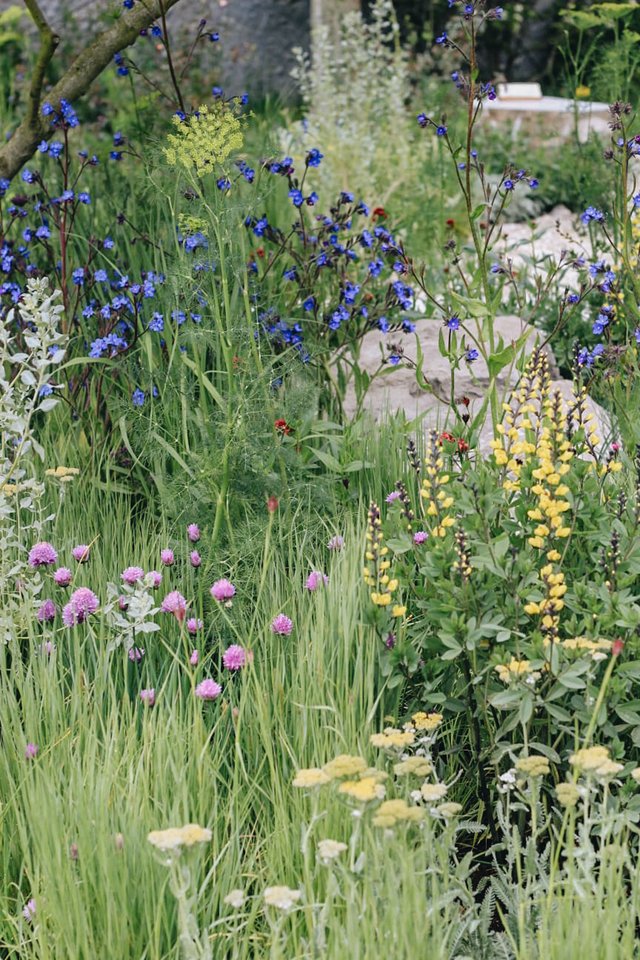
Harry Holding and Alex Michaelis' The Eden Project: 'Bring Me Sunshine' Garden at Chelsea Flower Show, 2026
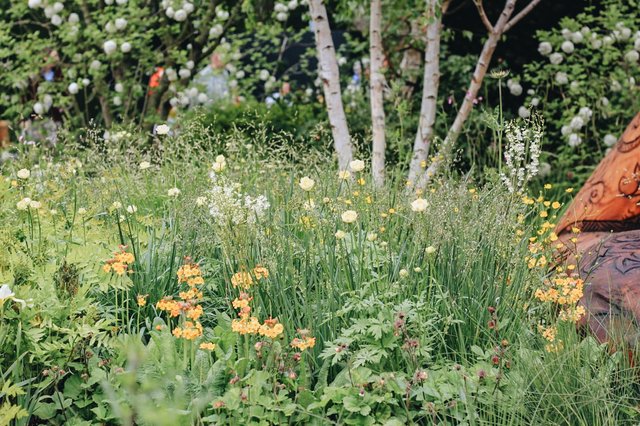
Sarah Eberle's The campaign to Protect Rural England: 'On The Edge' Garden at Chelsea Flower Show, 2026
Good grounding
The key to holding the whole concept together is a successful base layer, which combines a mix of low-growing and low-maintenance species, such as spreading perennials, robust grasses, and hardy ferns. As these plants knit together over time, a well-chosen palette helps to cover as much bare ground as possible, conserving moisture while simultaneously suppressing troublesome weed seedlings.
Depending on the aspect and conditions of your outdoor space, you may opt for a base layer dominated by a single recurring species to unify the scheme. For example, in shadier areas, small sedge-like grasses can provide a cohesive, low-maintenance solution. Equally, you may wish to introduce emergent perennials that offer early-season foliage, each gradually coming into its own as the season progresses.
Grounding plant options






Aesthetic shoots
Next, it’s the turn of your punctuation plants.
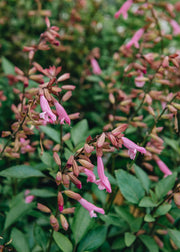
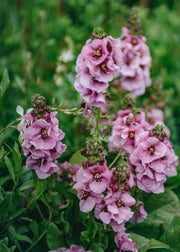
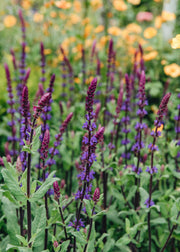
With their seasonal rhythm and succession of colour, these exuberant blooms guide the eye through the planting scheme. Their contrasting heights and textures rise above the base layer, adding movement and excitement while also creating a welcoming habitat for pollinators. When selecting clear candidates for this next stage, think of classic border perennials that will rise above your base layer – such as Salvias, Lupins, or Heleniums. The key is to avoid anything that may need staking, allowing the plants to largely take care of themselves.
Lastly, for year-round success, it’s best to choose around three plants that will each be at their peak at any one time. This avoids crowding and spreads interest across several seasons.
Show stopping flowers



Arresting structure
For this layer, you’re going to want to step back and awaken your inner organic architect.
To provide satisfying overall structure to your scheme, think of these focal plants as the full stops as you read the landscape – offering moments of pause with eye-catching wonder. You’ll want to opt for architectural plants that afford a sense of establishment: statuesque perennials to hold the gaze, and larger, rhythmic grasses for movement, texture, and sound.
Multi-stem shrubs that work well include Amelanchier, Sambucus and Cotinus, as do small trees with their varied canopies. Likewise, tall ornamental grasses like Molinia and Panicum are excellent for holding structure, even in deep winter.
Even if these are not the first plants you put in the ground, when approaching a project, it is advisable to have a clear idea of the focal plants you want and where you want them.
Arresting plants


Gracing the gaps
No doubt you’ve heard the mixtape mantra: “all killer, no filler.” But, as you’ll soon see, when it comes to this final stage, a “filler” plant should never be underestimated.
So, when it comes time to complete your scheme, you’ll want to seriously consider incorporating billowing varieties such as tender bulbs, annuals, biennials, and even short-lived perennials. These filler plants aesthetically soften gaps while covering any patches of bare soil, providing colour and coverage while slower growers find their feet.
In our humble view, biennials are particularly deserving of consideration. Proving wonderful additions to help bridge the May/June gap, genera such as Single Dahlias and Verbenas will bloom all summer, right up until late autumn’s frosts.
Likewise, when it comes to those punctuating perennials, why not consider groups of Cosmos, Ammi, Helianthus, and Zinnia?
Learn more with our stories and guides


Glossary
